Where Water Meets Sky: Inside Joel Toews’ “Mirrors in Haida Gwaii”
September 22, 2026 | New York City
New York, NY—This week the New Conductors Orchestra had the pleasure of speaking with contemporary Canadian composer Joel Toews to explore the creative spirit behind Mirrors in Haida Gwaii, and to get to know the composer. Mirrors in Haida Gwaii will be the U.S. premiere of “ORCHESTRAL VOICES,” NCO’s Fall concert series on October 17 and 18, 2026.
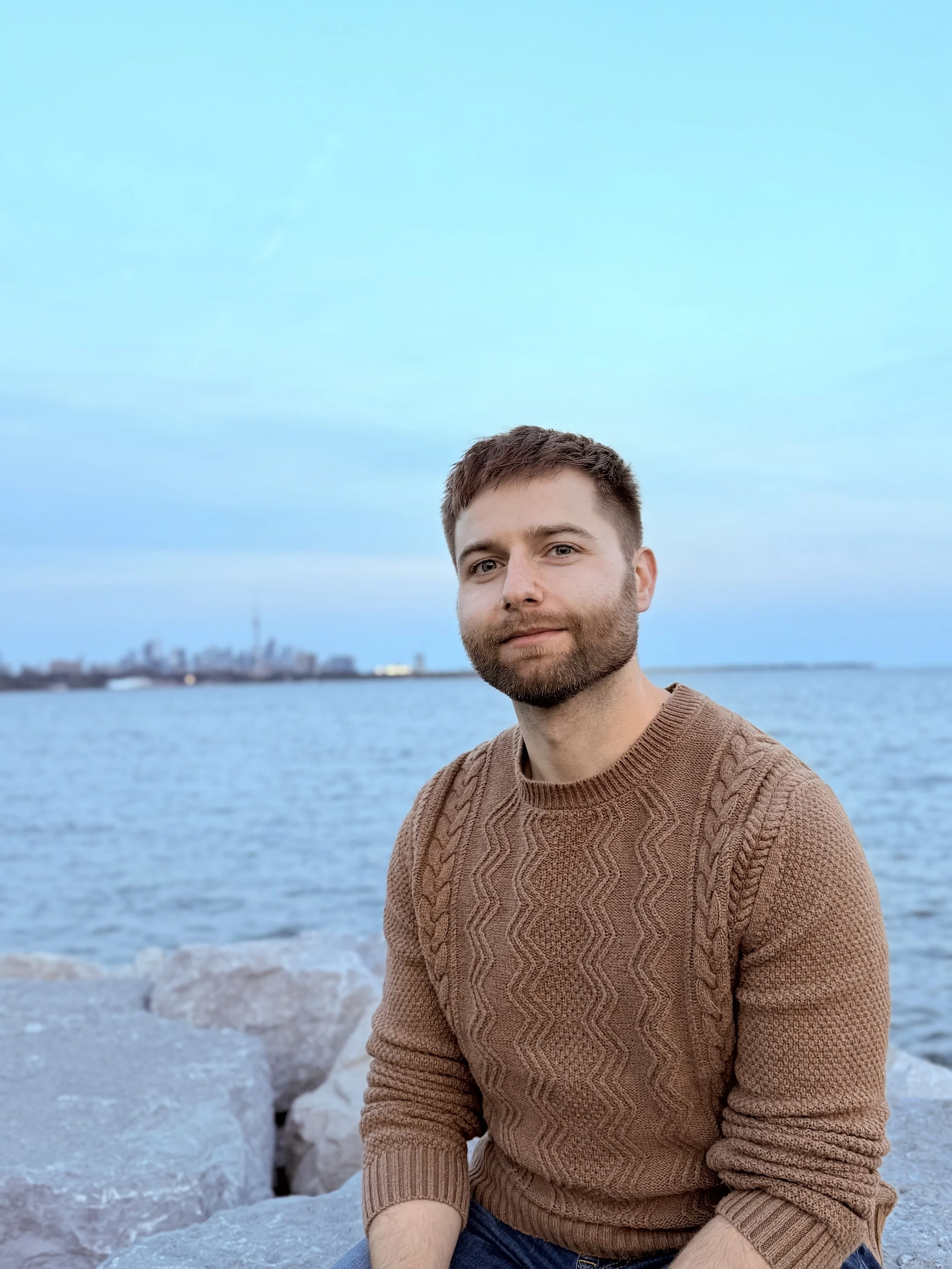
Joel draws on classical, jazz, and contemporary pop styles to weave music that is spirited and unwavering. His work has been performed across Canada by many renowned ensembles, including the Toronto Symphony Orchestra, Edmonton Symphony Orchestra, Orchestra Toronto, Cathedral Bluffs Symphony Orchestra, and University of Alberta Symphony. Worldwide, his orchestral compositions have been performed by the Litha Orchestra (New York), New Conductors Orchestra (New York) and the Sofia Philharmonic Orchestra (Bulgaria).
For those who might be listening to your music for the first time, walk us through Mirrors in Haida Gwaii. What inspired you to create this piece?
Toews: The inspiration for Mirrors in Haida Gwaii came from a trip I took with two of my siblings to the remote island of Haida Gwaii in 2017. This archipelago lies eight hours off the coast of Vancouver Island in Northern British Columbia, Canada. The scenery and landscapes I experienced on that trip were something I never thought I’d see in Canada – it truly felt otherworldly. Lush green trees and sprawling mountains, with a foggy grey atmosphere that gave the impression of an early morning in a rainforest. The entire island is incredible, but the most specific memory I have comes from a morning kayaking trip across Alliford Bay, just outside of Daajing Giids. Most days, when I looked out beyond the coasts of Haida Gwaii, I was met with a fierce and endless ocean, but on this particular morning, I was lucky enough to experience the ocean as clear and calm as glass.
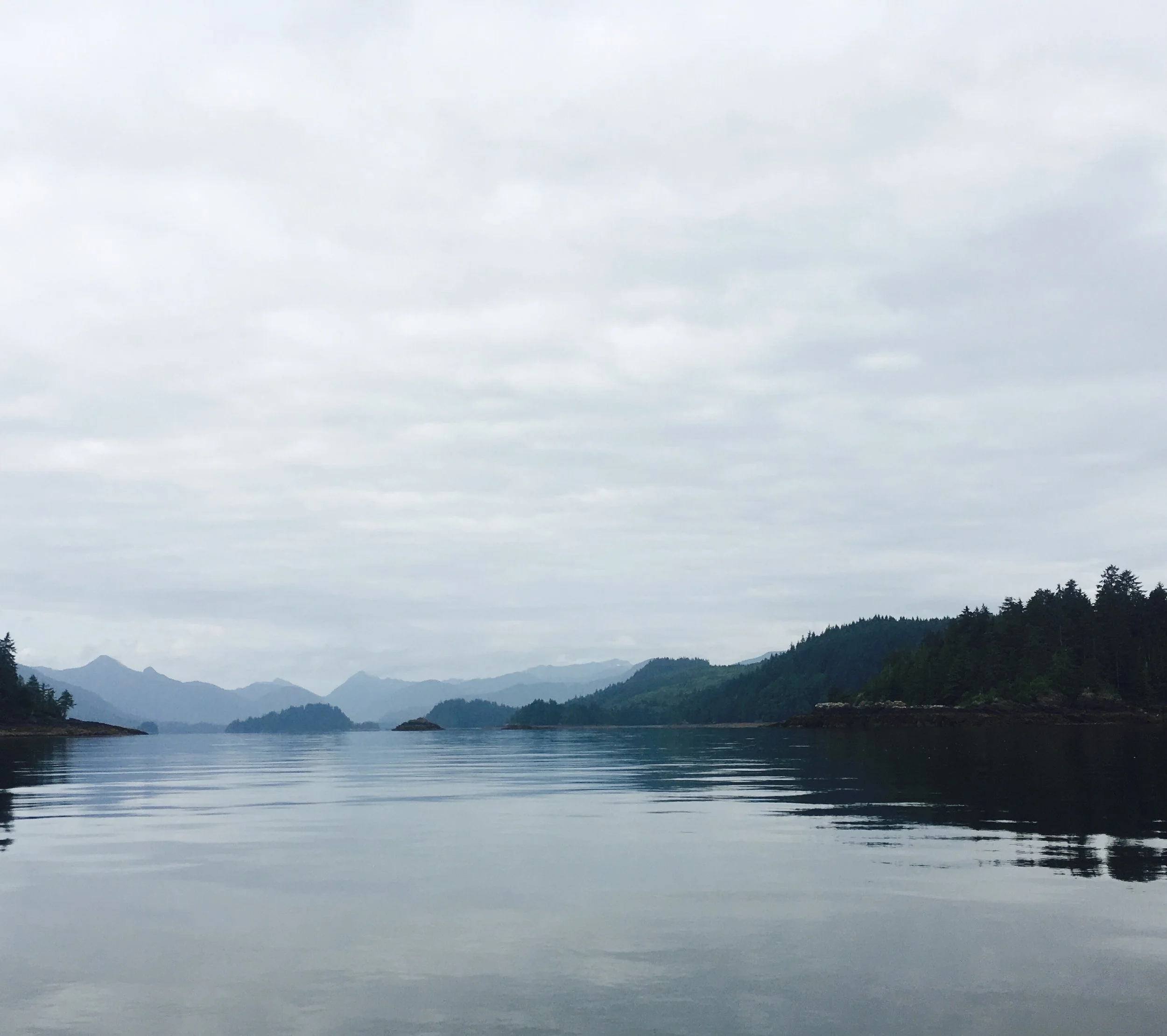
A landscape photo taken by Joel Toews on his kayaking trip in Haida Gwaii
Mirrors in Haida Gwaii is described by you as capturing a moment where it was "impossible to see where water stopped and sky began." As a composer, how do you translate that visual ambiguity into sound?
Toews: To depict water as still as mirrored glass, the main compositional approach in this piece is inverted intervals and melodies. The opening starts with descending parallel fifths in the tremolo strings while a solo alto flute plays oppositionally in ascending octaves, fourths and fifths. This is followed by a solo horn playing a dramatic ascending minor seventh, which is quickly inverted by the remaining horns a few measures later. Throughout the piece, fifths and sevenths are the intervals that feature most predominantly, written in one direction, and often followed by an inversion. Fifths were chosen because of their open character, creating a multitude of harmonic possibilities, while sevenths were chosen because of their ambiguous, dramatic, and slightly dissonant character. After the dreamy and atmospheric opening, the kayaking begins with a melody in 5/4 carried by alto flute and clarinet, conveying the constant motion of a paddle in and out of the water. In contrast to a canoe paddle, kayak paddles are double-bladed, meaning that as one blade dips into the water, the other blade is lifted out of the water. This is reflected in the contrasting direction of the alto flute and clarinet, and just like the paddle, as one melody goes down, the other goes up. Bringing in the primary intervals used for this piece, the alto flute melody spans the interval of a minor seventh, while the clarinet melody primarily spans the interval of a perfect fifth.
This is the second piece in the Wild Space Series following Athabasca. Is there a unifying musical thread or motif that connects these works, or does each stand alone as a unique portrait of its respective location?
Toews: Melodically and harmonically, these pieces are unique and stand on their own to reflect their specific location. That said, the unifying theme between all 5 compositions in my Wild Spaces Series is that of reflection on the natural beauty of our world and what can be done to help sustain these places in a world increasingly affected by climate change. This series comes out of my Master's degree research on contemporary music composers engaging with themes of environmental sustainability and climate action through their artistic output. With the natural world increasingly impacted by human choices, it is imperative for people to pause and reflect on their personal impact, as well as the repercussions of the organizations and governments they support. The Wild Spaces Series is my contribution to a long lineage of composers creating music to reflect the world and issues around them, with the hope that it generates a sense of individual reflection on the threats facing the natural world around us, and through that reflection, stirs action towards a more sustainable future. In addition, 15% of all rental and royalty fees from any performances of works from the Wild Spaces Series are donated to environmental sustainability efforts. For this work, that money is going to the Council of the Haida Nation Marine Stewardship department.
If you could sit down and have tea with any composer from history, living or deceased, who would it be and what would you ask them?
Toews: This is such a great question! That said, I think my answer would be Johannes Brahms. I love his piano works, orchestral works, concertos (let's talk about the double concerto) and chamber works (I would love to get his insight on his piano quintet). On top of a great conversation about music and orchestration, I can relate to the intimidation Brahms felt of Beethoven and how that reverence can lead to perfectionistic tendencies, making it difficult to write or publish music. I have had similar feelings looking at the greatness of both historic and contemporary composers, and it would be amazing to hear from a master like Brahms on ways to overcome that, or even use that, to produce great work (although...I hope it doesn't take me 20 years to make a first symphony!)
What projects are you currently working on that you're particularly excited about?
Toews: I am currently working on writing music for a new instrumental album of electro-classical music. I released my first EP this past Spring, titled We Remember Moments, and that was such a fun experience (FYI, it's also available on all streaming platforms). I'm looking forward to getting these compositions completed and then working with some talented musicians to record and produce the album.
What do you enjoy doing most?
Toews: Outside of music, I thoroughly enjoy camping and cottage trips with my partner, Michael, and our dog, Lyra. We are a very outdoorsy little family, and love spending time hiking, canoeing, or simply relaxing by a fire or in a hammock. A big motivation to write music about Wild Spaces and for their protection is that I have so many wonderful memories of being outdoors and appreciating national and provincial parks across Canada.
The New Conductors Orchestra’s “ORCHESTRAL VOICES” concert series will present the United States premiere of Toews’ Mirrors in Haida Gwaii, along with the complete program:
Paul Dukas Fanfare from La Peri
Giovanni Gabrieli Canzon Septimi Toni No. 2 and Canzona per Sonare No. 2
Billy Joel And So It Goes (arr. Gareth Lewis)
W.A. Mozart selections from Gran Partita (Wind Serenade No. 10)
Edvard Grieg Holberg Suite
Samuel Barber Knoxville: Summer of 1915 (featuring Sydney Kucine as soprano soloist!)
Tickets to the concerts are now available for purchase.
About New Conductors Orchestra
Founded in 2019, the New Conductors Orchestra (NCO) is a unique community ensemble that champions the next generation of musical leaders. With no set conductor, NCO engages emerging talent from the conducting world, offering them the opportunity to lead dynamic, high-level performances. Through these concerts, NCO bridges the gap between formal conducting education and the professional world, while also featuring works by both classical and living composers. Under the guidance of Lead Conductor Mark Powell, NCO is determined to nurture a collaborative environment where conductors and musicians alike can shape their musical journey.
For Media Inquiries
Publicity and Communications/New Conductors Orchestra
Maryam Ali | business.maryamali@gmail.com